

ARTICLE
Insight
Children Are Starting to Wear Makeup at an Earlier Age—Exploring the Reality Behind Instagram Posts!
※This article is an edited version of a survey conducted for『ampule magazine vol.16』, with additional analysis that could not be included in the print edition.
With new trends spreading through social media, what’s the current state of kids’ makeup?

We conducted a thorough analysis of Instagram posts related to kids’ makeup to uncover the real-world trends of today.
[ Survey Overview ] We collected post data tagged with hashtags related to kids’ makeup and analyzed the content of these posts—including visual information such as images and videos—using multimodal AI. Target platforms: Instagram / Target hashtags: #KidsMakeup #SchoolMakeup #StudentMakeup #KidsCosmetics #SchoolMakeup # Makeup Play #ElementarySchoolMakeup #KidsMakeup #MiddleSchoolMakeup #HighSchoolMakeup #SchoolCosmetics Timeframe: January 1, 2021 – February 20, 2026 / Number of Data Points Collected (Subject to AI Analysis): 22,550 / Number of Valid Analysis Samples (Posts unrelated to beauty were excluded based on AI analysis results): 21,263
The Current State of Kids’ Makeup, as Seen Through the Data
Increase in Posts from Younger Age Groups
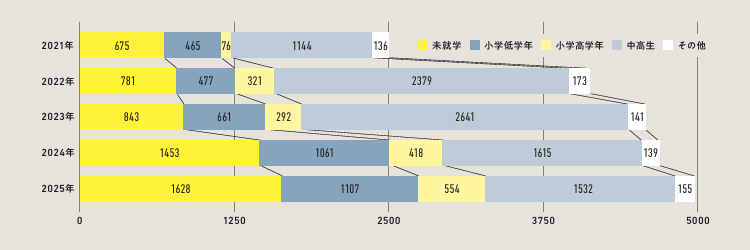
Looking at the trend in the number of posts over the past five years or so, it is clear that posts related to kids’ makeup have been on the rise in recent years.

Over the past five years, the total number of posts has roughly doubled. When broken down by age group, posts featuring preschoolers and elementary school students have increased particularly sharply. While junior high and high school students accounted for more than half (57.7%) of posts in 2023, the proportions reversed by 2025 (preschoolers & elementary school students: 66.1%, junior high and high school students: 30.8%).

Among posts featuring preschoolers and elementary school students, there has been a particularly sharp increase in posts from business accounts, such as photography studios and toy brands (2021: 549 posts; 2025: 1,846 posts). These results reflect a new trend in social media marketing and suggest that content shared by business accounts may be driving the growth of the kids’ cosmetics market targeting younger age groups.
The most common category is “point makeup.”
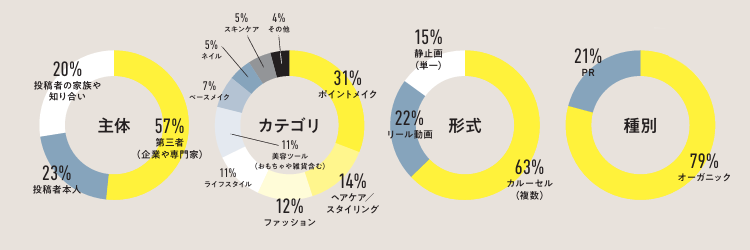
While the vast majority of posts are made by family members, companies, or stores—that is, by people other than the child—the number of posts reflecting the child’s own preferences gradually increases starting in the upper elementary school years. During early childhood and the lower elementary school years, makeup is often treated as part of special “play” or “events”—such as Shichi-Go-San, recitals, Halloween, and dance events—that are distinct from daily life. However, as children grow older, makeup shifts from being merely “play” to a “means of self-expression,” which likely makes it easier for the child’s own preferences to be reflected in the content of their posts.
In terms of categories, “accent makeup” such as lipstick and eyeshadow accounted for the largest share at 31%. Driven in part by parents’ concerns about skin irritation, accent makeup—which is easy to apply and comes in a wide range of colors—seems to be a popular choice. Incidentally, while we did not include nail art in this analysis due to its potential impact on accuracy, there are a significant number of posts on the topic under the hashtag “#KidsNails,” totaling 114,000 as of March 2026.
Furthermore, while short videos have become the mainstream format on social media in recent years, carousel posts—which use multiple still images—accounted for 63% of all posts related to kids’ makeup. It is believed that carousel posts are preferred because they make it easier to present a larger amount of information, visually convey the makeup process and changes, and are simple to create and share.
Trends by Age Group TOPICS
Preschoolers
Kids' Cosmetics with a Wide Selection to Satisfy Their Sense of Style
Top 3 Brands
1st Peachand
2nd SHOBIDO
3rd Little Bling

Top 3 Items
1st Place: Lip Products
2nd Place: Beauty Tools (including toys and miscellaneous items)
3rd Place: Eyeshadow
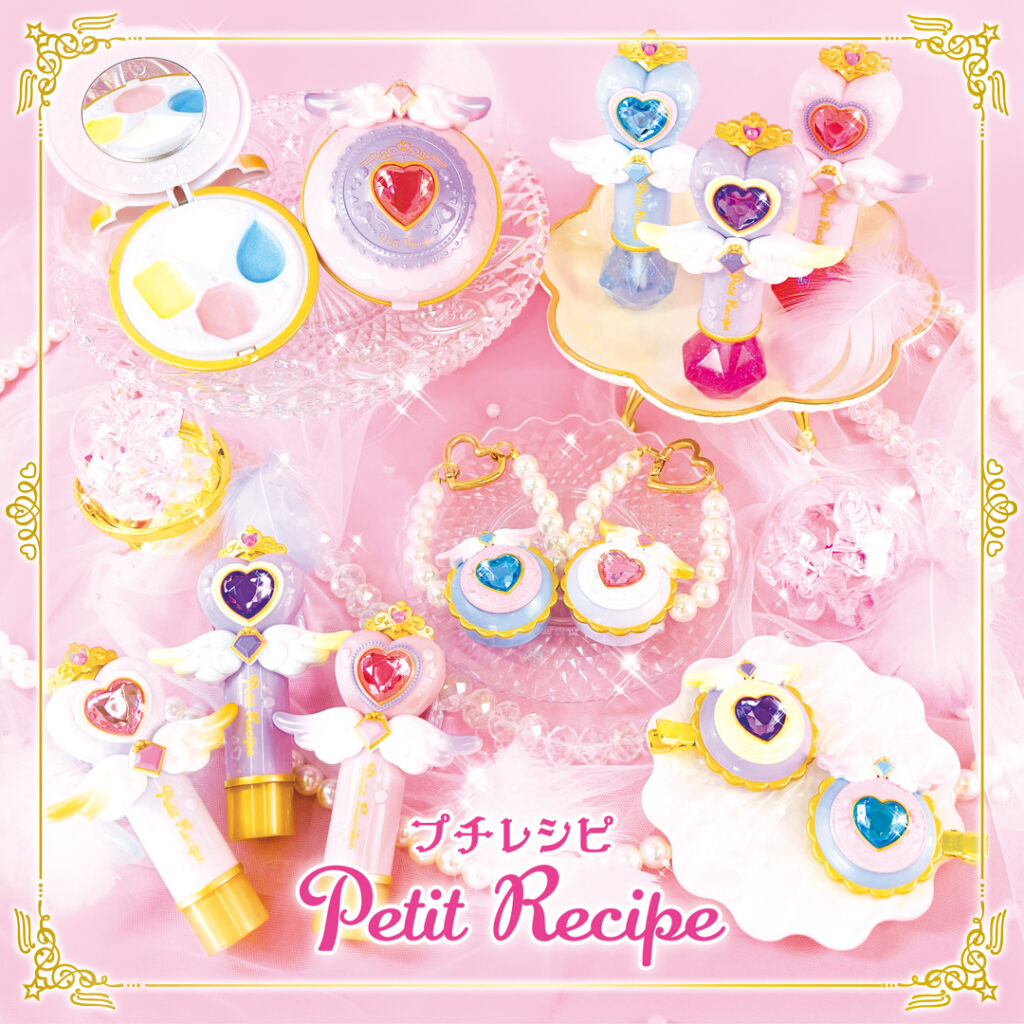
Posts featuring preschoolers frequently highlighted cosmetic brands and items specifically developed for children with safety in mind. These features appear to be crucial factors in giving parents the confidence that the products are safe for their children to use.

Many posts also showcased products featuring character collaborations or sparkling, glittery designs. For preschoolers, makeup is enjoyed less as a means of looking "beautiful" in the adult sense and more as a form of "pretend play" or "playing dress-up"; it is often incorporated into games where they pretend to be princesses or mimic their mothers. Because these products look more like toys, novelty items, or character merchandise than functional cosmetics, the barrier to the act of "wearing makeup" is likely lowered for both parents and children.
Posts Viewed Through the Parents’ Perspective
Since posts involving preschoolers are usually created by parents rather than the children themselves, the content strongly reflects the parents' values.

Rather than the child deciding how they wish to present themselves, posts are often driven by the parent's desire to "capture a cute moment" or "share the fun they had together," making these posts significant as records of parent-child experiences and the child's growth.

By conveying from an early age that "looking cute" and "dressing up" are fun and valuable activities, kids' makeup serves not only as play but also as an early introduction for children to the culture of beauty and fashion.
Elementary school student
A shift toward makeup for self-expression, driven by a growing awareness of how one is perceived.
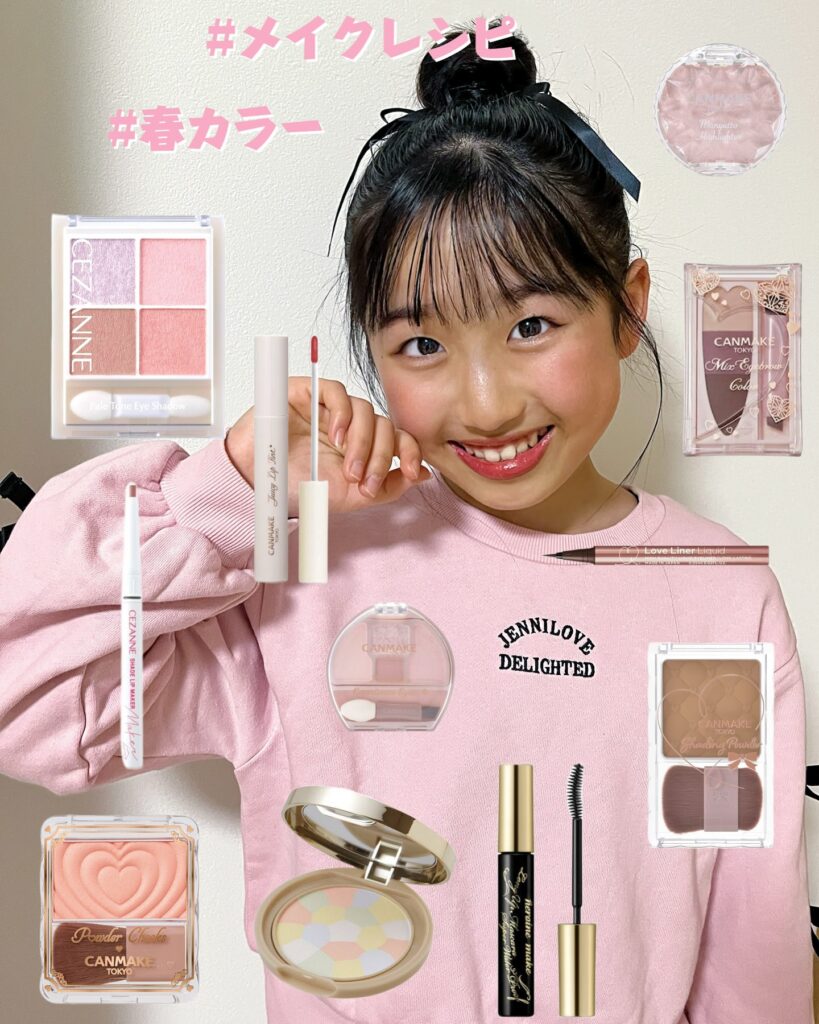
Compared to the preschool years, which center on make-believe and imitating adults, the elementary school years see a shift toward makeup aimed at boosting self-esteem and improving one's image.

As children become more self-conscious and susceptible to outside influences, they begin to pay closer attention to their appearance and how others perceive them, coming to view makeup as a form of self-expression.

Social media posts also evolve; content that initially reflects a parent's perspective gradually shifts to reveal the child's own initiative, and by the upper grades, posts increasingly reflect the child's own opinions rather than those of others.
Makeup awareness spreading through friends, social media, and the media.
The elementary school years mark a period when the significance of makeup gradually shifts as children progress from the lower to the upper grades. In the lower grades, much like with preschoolers, makeup tends to be enjoyed as part of play or special events; however, as children reach the upper grades, their approach evolves—influenced by friendships, social media, video content, and influencers—into a style of makeup that reflects a conscious desire to shape how they present themselves to others.

While makeup can serve as a means to boost self-esteem and express one's individuality, it can also heighten self-consciousness regarding appearance and the opinions of others. Posts featuring makeup worn by elementary school-aged children reflect a process where the child's own preferences and desires begin to emerge, and makeup becomes a familiar form of self-expression shaped by friendships, social media, and current trends.
Junior high and high school students
The focus is on base makeup, with self-expression and impression management becoming increasingly prominent.
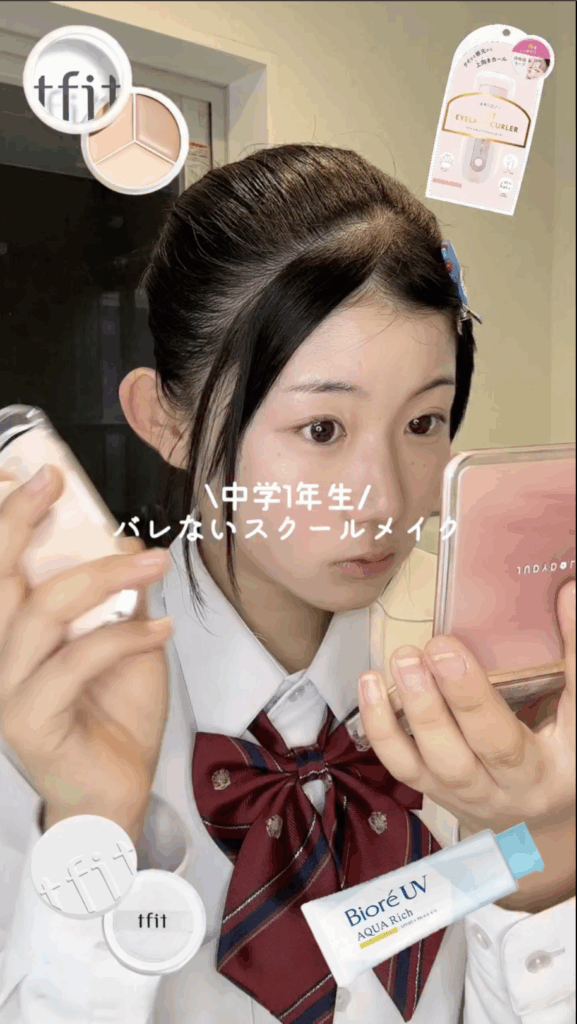
A distinctive feature of makeup-related posts by junior high and high school students—an age group prone to skin issues and concerns typical of adolescence—is the blurring of the line between makeup and skincare. Given that this is a time when skin problems such as acne, excess sebum, and sunburn frequently arise, many posts focus not merely on creating a glamorous look, but on achieving a beautiful complexion, a clean appearance, or a natural "no-makeup" look; posts regarding base makeup products like sunscreen and primers were particularly common.

Furthermore, as makeup becomes a means of self-expression and impression management, it is evident that students often start with base makeup and go on to enjoy a wide variety of makeup styles.
The spread of “undetectable makeup” and information sharing within the constraints of school rules.
Since many schools prohibit makeup, posts by middle and high school students primarily focus on "school-appropriate" makeup—styles that look cute and enhanced without getting them in trouble. Influenced by media and social media, there is also a strong emphasis on trending makeup looks and products.
Furthermore, the focus of these posts has shifted to the students themselves; there is a growing trend of sharing information with peers, such as reviews on product usage, recommendations for cosmetics, and tutorials on school-appropriate makeup techniques. For middle and high school students, makeup appears to serve as a means of expressing their individuality and cuteness, even while remaining mindful of school rules and the perceptions of those around them.
The real-life experience of kids’ makeup
Analysis and Text: Mai Kaneko
Data Collection and Analysis: Hayato Watanabe



My daughters’ love for style—starting at age 3
Miyu (13) & Remi (8)
My daughters started showing an interest in makeup when they were just 3 or 4 years old. Since I love cosmetics myself, it didn’t take long for them to get curious.
I’ve bought them safe, kid-friendly makeup kits and gentle, low-irritation products since they were little. My eldest daughter has even used her own allowance to build up a full collection of makeup tools—before I knew it, she had over 100 items! Sometimes we even go shopping for them together at variety stores.
I’m amazed at how they rival adults in their morning routines—styling their hair with irons and taking plenty of time to get ready before school—but for now, they mostly enjoy natural-looking makeup on their days off, which is lovely to see. Watching her big sister, my younger daughter has started applying lip gloss on her days off, too.
It makes me happy to see them enjoying makeup from such a young age.
From a tiny makeup lover to enjoying a full daily skincare routine
NAYU(11)
She first encountered cosmetics when she was an infant. She must have been fascinated; I was shocked when I turned my back for a moment and found she had taken a red lipstick from my makeup pouch and was happily smearing it all over the wall!
She made her “real” makeup debut at age one. Watching her apply pink lipstick and freely experiment with palettes, I was convinced she would grow up to love makeup.
Now, on weekdays, she keeps it simple with just sunscreen and a few accent touches after school, while on weekends, she enjoys putting a bit more effort into her look. I’ve taught her the important dos and don’ts, and since she takes good care of her skin while having fun, she hasn’t had any issues so far. I’m impressed by her diligence—she never skips her daily sunscreen or morning face mask, and she takes great care of herself using hair oil and hand cream every day. It seems she also enjoys chatting with friends about the latest trending products.
Makeup lifts her spirits and puts her in a positive mood, so I think it’s been a wonderful experience for her.