ARTICLE
Insight
“J-Beauty” Has Finally Gained Momentum as a Strategic Industry for Japan. We Speak with Representative Fumiaki Kobayashi, Secretary-General of the Parliamentary League, About an “All-Japan” Approach to Global Success
“J-Beauty” has finally gained full momentum as a key growth strategy for Japan. On October 16, the “Parliamentary League for the Promotion of the J-Beauty (tentative name) Industry” was launched. Moving forward, a private-sector consortium is scheduled to be launched by the end of the year to facilitate cross-industry collaboration among all sectors related to J-Beauty, including cosmetics, hair and nail salons, and beauty equipment.

AMPULE recently interviewed Fumiaki Kobayashi, a member of the House of Representatives who also serves as secretary-general of the parliamentary league. We delve into the potential of J-Beauty as a national industry and the strategies for enhancing its international competitiveness.
[We spoke with…]
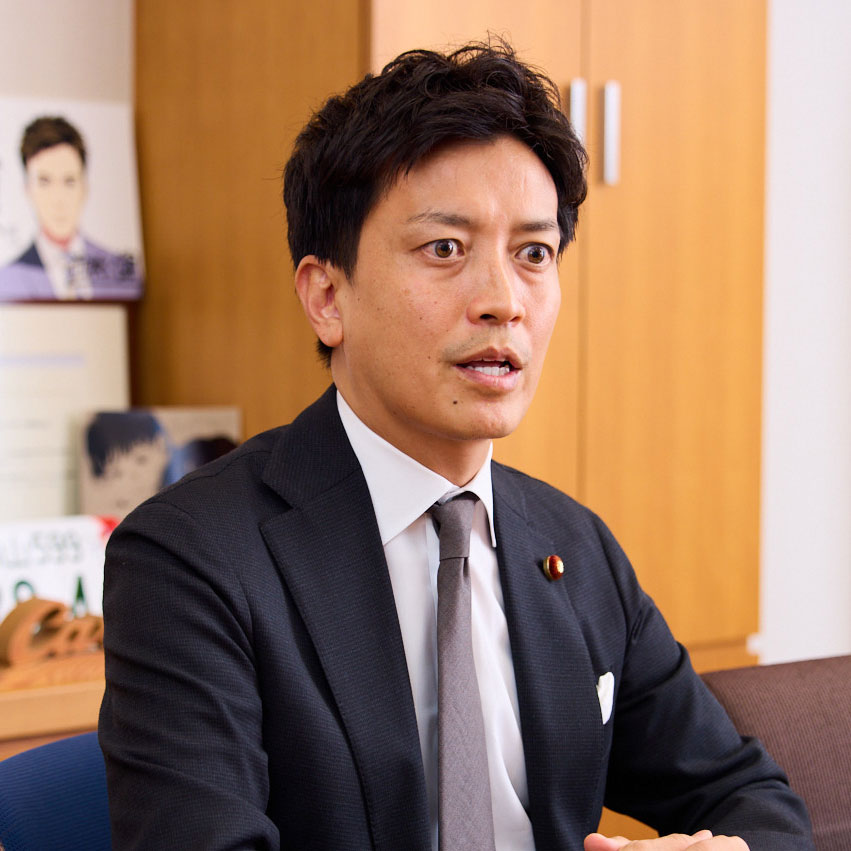
Fumiaki Kobayashi
J-BeautySecretary-General, Parliamentary League for Industrial Promotion 1983年、Born in 1983 in Fukuyama City, Hiroshima Prefecture. Graduated from Sophia University. After working at NTT Docomo, he was first elected to the House of Representatives in 2012. He was involved in launching the “J-Beauty Industry Study Group” and serves as Secretary-General of the “Parliamentary League for J-Beauty (tentative name) Industrial Promotion,” which was established in October 2026.
Three Key Points from This Article
- “J-Beauty Industry Promotion Parliamentary League” Launched: Launched as a national strategy aiming for 2 trillion yen in cosmetics exports by 2033.
- Private-sector consortium scheduled to be established in December:Promoting cross-sector collaboration not only in cosmetics but also in hair, nails, and beauty equipment.
- Review of 56 Advertising Regulations:Promoting regulatory reforms, including amendments to the Pharmaceutical and Medical Devices Act, and the establishment of a cross-ministerial coordinating body.
目次
“J-Beauty (tentative name) Parliamentary League for Industrial Promotion” Launched in October
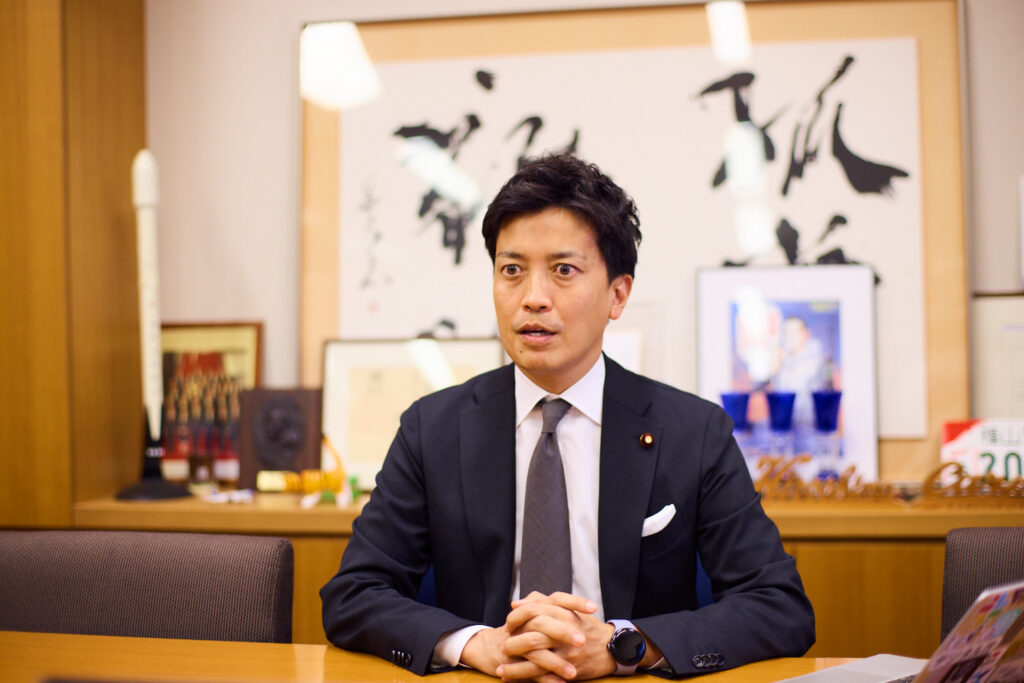
——To recap, why did Japan decide to promote “J-Beauty” as a national strategy? Could you explain the background leading up to this decision?

It all began when Representative Yozo Kaneko—who also serves as Secretary-General of the “J-Beauty (tentative name) Industry Promotion Parliamentary League” (hereinafter referred to as the “Parliamentary League”)—was approached by a business owner in his home district of Nagasaki with the question, “Is there a way to further grow Japan’s beauty industry?” I joined him in listening to this inquiry, and as we exchanged views with other business leaders, I became convinced that this was an industry with tremendous potential.

From there, we first launched the “J-Beauty Industry Study Group” in June 2025 and compiled and submitted our recommendations to the government in May 2026. The term “J-Beauty” was also included in the “Basic Policy” announced in July. This parliamentary league is the natural evolution of that study group.

We view the expansion of overseas exports as one of the keys to promoting J-Beauty, and the chairman of our parliamentary group is Representative Yoshimasa Hayashi, who worked tirelessly to expand exports of agricultural, forestry, and fishery products during his tenure as Minister of Agriculture, Forestry and Fisheries in the Abe Cabinet.
——While K-Beauty has experienced rapid growth and taken the global market by storm, Japan’s exports of cosmetics—the core of J-Beauty—have declined from approximately 0.8 trillion yen before the pandemic to about 0.5 trillion yen.


South Korea has a system in place that allows for the rapid launch of new brands and products, built on a foundation of major ODM and OEM manufacturers that handle contract manufacturing for cosmetics. There is also a high degree of freedom regarding advertising claims for cosmetics. Furthermore, by combining these efforts with aesthetic medicine to promote “holistic beauty” tourism, South Korea is attracting a large number of inbound tourists from Japan as well.
While there is much to learn from South Korea’s national strategy, Japan does not need to imitate everything. I believe Japan should pool its inherent strengths—such as the quality and sense of security cultivated by Japanese cosmetics brands over many years, the high quality of hair, nail, and spa services combined with the power of Japanese hospitality, and high-performance beauty equipment—and compete as a united “All-Japan” front.
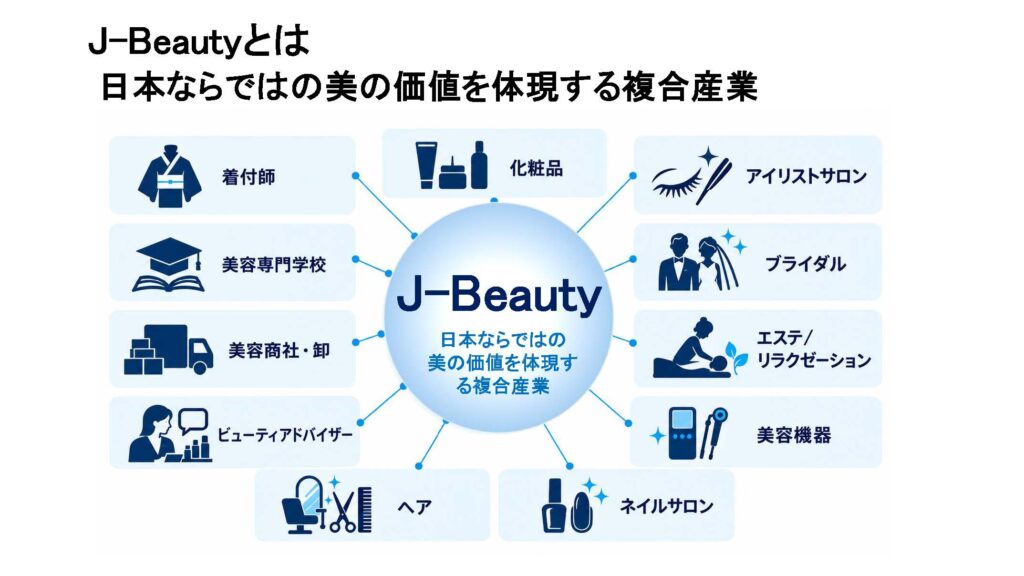
Centered on a private-sector consortium, collaborating with the hair, nail, and beauty equipment industries
——As a medium- to long-term goal, a ambitious target of 2 trillion yen in cosmetics exports (including local production and sales) by 2033 has been set. What strategies will be pursued going forward to achieve this?

The parliamentary league’s overall direction is centered on the following four pillars
① “Formulating a Robust, All-Around Strategy”
We look forward to seeing strategies not only for overseas expansion (outbound) but also for attracting new customers domestically (inbound). The latter, in particular, is expected to have economic ripple effects on regional areas, small and medium-sized enterprises, and sole proprietors.
②“Addressing Structural Challenges in Various Sectors”
Among these, the issue of “regulations and systems” should be addressed as a top priority. In South Korea, the laws equivalent to Japan’s Pharmaceutical and Medical Devices Act and the laws governing cosmetics are separate, resulting in fewer restrictions on advertising and labeling on packaging.
In contrast, Japan limits the claimed benefits that can be used in cosmetic advertising to “56 items,” which prevents the full value of products from being adequately communicated to consumers. Reviewing these regulations and promoting free and healthy competition is an issue that must be addressed at the national level. At the same time, we will strengthen enforcement against illegal activities to ensure the safety of products and services.
③“Mechanisms to Stimulate Private-Sector, Cross-Industry Projects”
A consortium led by private companies is scheduled to be launched by December. We expect that collaboration across industry boundaries—including cosmetics, hair care, nails, esthetics, and beauty devices—will result in a steady stream of new, private-sector-led cross-industry projects and collaborations.
For example, wouldn’t international travelers welcome a shop at Narita or Haneda Airport where they could experience a comprehensive selection of Japanese beauty products all in one place?
④ “Full Utilization of Existing Assets”
As with other industries, we plan to widely promote J-Beauty through Japanese embassies and consulates around the world, as well as events such as World Expos where people from all over the globe gather.
As a parliamentary group, we plan to meet about once a month to deepen our discussions. While we will generally leave specific activities to voluntary projects by private companies, we will address structural issues requiring political intervention and the development of shared infrastructure by implementing measures based on recommendations from the consortium.

Since the term “J-Beauty” is still a working title, we hope to clarify the vision for Japan’s beauty industry through ongoing communication with various companies.
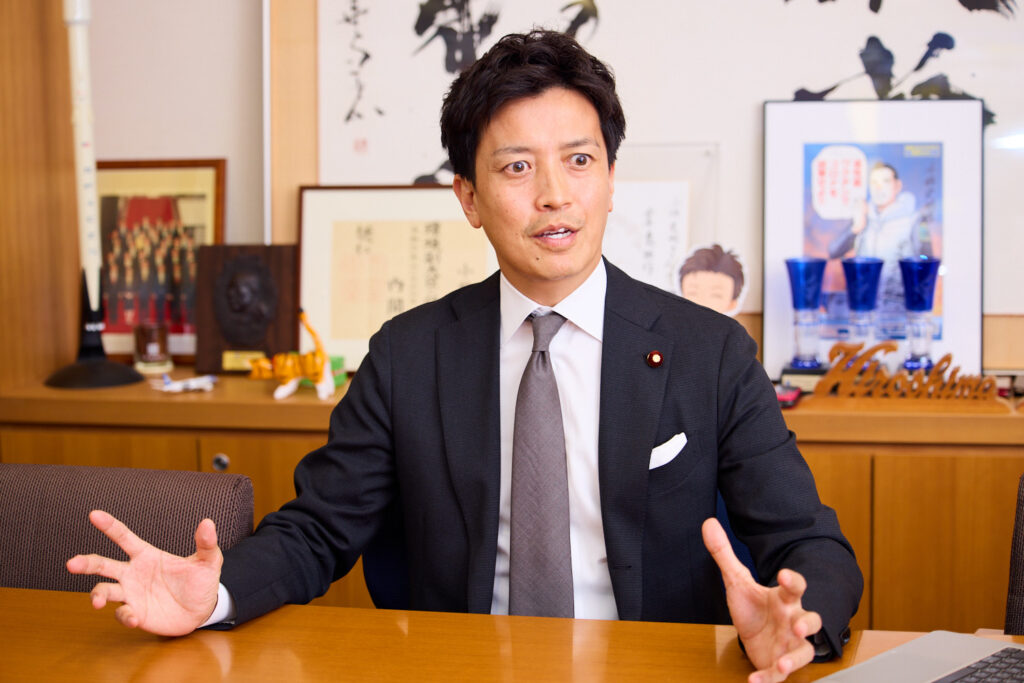
——As we move forward with this as a national strategy, coordination among government ministries and agencies will likely be crucial. The beauty industry involves many relevant ministries and agencies, such as the Ministry of Health, Labor and Welfare and the Ministry of Economy, Trade and Industry, doesn’t it?

The basic policy is to reform the current system, in which each ministry and agency operates independently in silos, and instead formulate and promote a growth strategy for the J-Beauty industry—as a national strategy—through a cross-ministerial approach.

Specifically, a Promotion Strategy Council is expected to be established by the end of this year. With the Cabinet Office serving as the overall coordinating body, we will build a framework that involves various ministries and agencies, including the Ministry of Economy, Trade and Industry (METI), the Ministry of Health, Labor and Welfare (MHLW), the Ministry of Internal Affairs and Communications, the Ministry of Foreign Affairs, the Japan Tourism Agency, the Consumer Affairs Agency, and—in terms of human resources and education—the Ministry of Education, Culture, Sports, Science and Technology (MEXT).
Promoting the J-Beauty industry will also lead to greater economic empowerment for women
——It has been just over a year since the launch of the “J-Beauty Industry Study Group.” This unprecedented pace reflects the high level of expectation from the national government.

In the political world, it is extremely rare for matters regarding a specific industrial policy to move forward so rapidly. Through repeated high-quality discussions, the awareness that “J-Beauty is worth promoting as a national strategy” has spread among government officials and members of the Diet, and the tide clearly began to turn partway through the process.

In fact, on the very day the parliamentary league was launched in October, we were joined by over 40 members of the House of Representatives and the House of Councillors, as well as more than 60 representatives from companies and organizations, and we felt a strong sense of momentum. Prime Minister Sanae Takaichi has also joined the parliamentary league and assumed the role of Senior Advisor.
——Finally, please share a message for everyone involved in the J-Beauty industry.

Global industrial policy has undergone a dramatic transformation over the past decade or so. Just as semiconductors and AI have become areas of competition at the national level, the cosmetics industry must also join forces—public and private sectors alike—to compete with France and South Korea.

However, the government has no intention of resorting to measures such as indiscriminately handing out subsidies to various sectors. The ideal approach is for the government and the private sector to jointly recognize “J-Beauty as a key growth industry for Japan” and present a clear strategy. This will boost the industry’s intrinsic motivation and create a wave of significant transformation.

Approximately 10 million people in Japan are employed in the beauty industry, the majority of whom are women. The development of J-Beauty will likely lead to greater economic empowerment for women and contribute to Japan’s vitality.

As a nation, I pledge to eliminate outdated regulations and create an environment where industry professionals can fully utilize their skills and enthusiasm. Let us transform the potential of J-Beauty into the strength to succeed on the global stage.
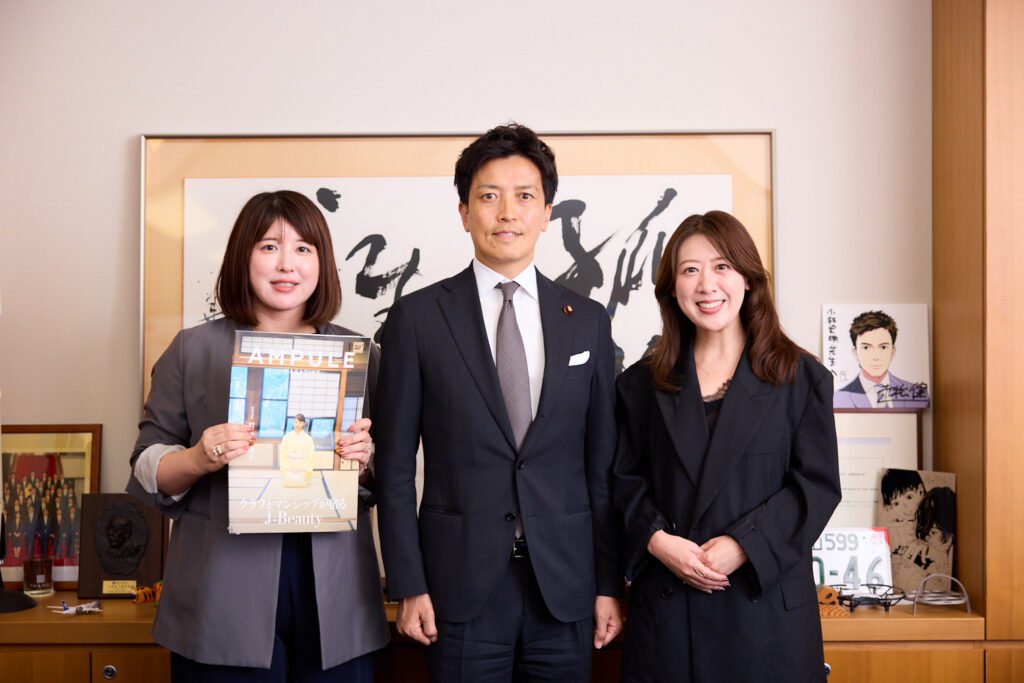
Text by Kumiko Matsumoto