
ARTICLE
Insight
2026/10/30
TREND UPDATES The J-Beauty Parliamentary League is finally launching. With both the government and the industry now taking action, can Japan’s beauty industry become a “single team”?
On October 16, 2026, the “J-Beauty Industry Promotion Parliamentary League (tentative name)” was established by Liberal Democratic Party lawmakers to provide government-level support for Japan’s beauty industry. A private-sector-led consortium comprising cosmetics manufacturers and salon associations is scheduled to launch in December.

Japan’s beauty industry has been losing ground in recent years due to competition from overseas products. Will the launch of this parliamentary league serve as a catalyst for a resurgence in the industry?
Table of Contents
- Industrial Promotion Parliamentary League Launched; Prime Minister Takaichi Joins
- Framework for an “All-Japan” Approach Takes Shape
- The Causes of Export Struggles Can Also Become Assets for J-Beauty
- The Challenge Lies in Uniting Beauty-Related Companies as “One Team”
- Toward a J-Beauty Strategy That Resonates with Consumers
Industrial Promotion Parliamentary League Launched; Prime Minister Takaichi Joins
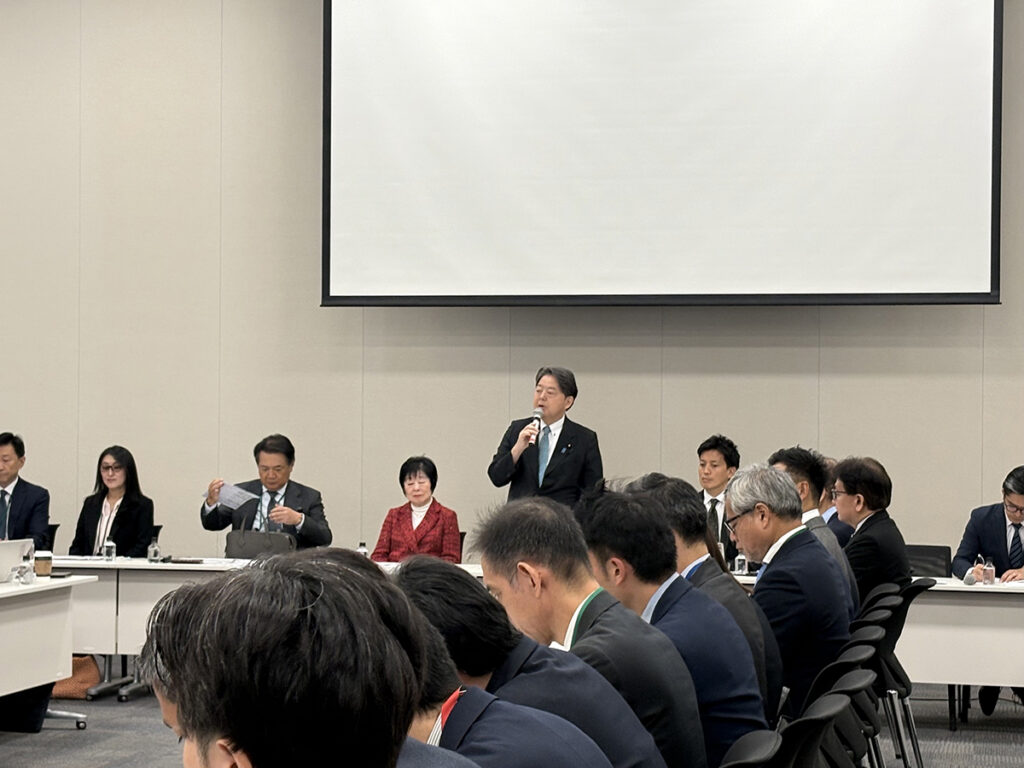
The parliamentary league’s predecessor was the Liberal Democratic Party’s “J-Beauty Industry Study Group,” chaired by House of Representatives member Yoshimasa Hayashi. Following a series of discussions beginning in June 2025, the parliamentary league was established.

At the founding general meeting, Mr. Hayashi was appointed chairman, House of Representatives member Fumiaki Kobayashi was appointed secretary-general, and House of Representatives member Yuzo Kaneko was appointed secretary-general. Forty-five members of the Diet attended in person, along with 43 proxies, and 61 representatives from companies and organizations also participated.

Going forward, the parliamentary group is expected to play a role in compiling issues raised by the industry and government ministries, and in supporting policy recommendations to the government and the revision of regulations. At the inaugural meeting, lawmakers with experience working at cosmetics companies and those with medical backgrounds were among those present, and opinions were exchanged.


On the day of the event, media attention focused on Prime Minister Sanae Takaichi’s membership, which had been reported in some outlets several days prior. At a press conference, Secretary-General Fumiaki Kobayashi explained the background, noting that around March of this year, the Prime Minister had expressed strong interest following outreach from members of the study group. He stated that they had invited the Prime Minister to join on the condition that she assume the role of Senior Advisor. Minister of Economy, Trade and Industry Minoru Jonai, Minister of Finance Satsuki Katayama, and Minister of Health, Labor and Welfare Kenichiro Ueno also expressed their intention to join.

Also attending the press conference was Kazutoshi Kobayashi (Chairman of Kose Holdings), who serves as Chairman of the Japan Cosmetic Industry Association and Chair of the Preparatory Committee for the private-sector consortium. While acknowledging that there are still disparities in the amount of information and expectations among participating companies and organizations, he expressed his intention to maintain close communication through the end of the year and work together as a united front.
The framework for an “All-Japan” initiative is taking shape.
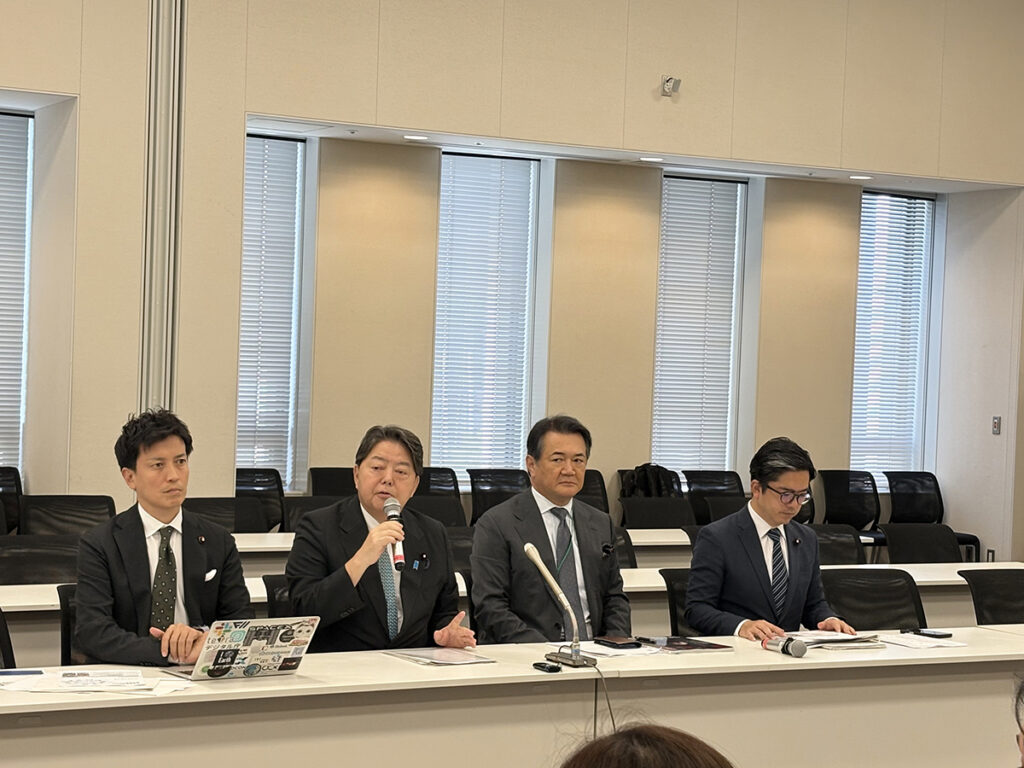
At the inaugural general meeting, five ministries—the Cabinet Office, the Ministry of Economy, Trade and Industry, the Ministry of Health, Labor and Welfare, the Ministry of Internal Affairs and Communications, and the Ministry of Foreign Affairs—reported on their initiatives, and four other agencies, including the Japan Tourism Agency and the Consumer Affairs Agency, were also in attendance. With representatives from all relevant ministries and agencies gathered together, the government’s proactive stance was evident.

J-Beauty encompasses not only cosmetics but also beauty appliances, hair care, nail care, and spa treatments—encompassing both products and services related to the Japanese beauty industry. Responsibilities are divided by sector: the Ministry of Health, Labor and Welfare oversees cosmetic advertising regulations and beauty therapist licensing; the Ministry of Economy, Trade and Industry handles beauty appliances and overseas sales promotion (including support for international expansion); the Ministry of Internal Affairs and Communications addresses illegal online advertising; and the Japan Tourism Agency manages beauty experiences for visitors to Japan. Given this division of responsibilities, cross-ministerial collaboration is essential for promoting the sector. Moving forward, the Cabinet Office plans to establish a cross-ministerial Promotion Strategy Council.

A study group at the Ministry of Economy, Trade and Industry (METI) has set a target of 2 trillion yen in overseas cosmetics sales (including local production and sales) by 2033.
The reasons behind the export struggles also represent the value of J-Beauty
According to trade statistics from the Ministry of Finance, the value of Japan’s cosmetics exports has been on a downward trend since peaking in 2021. Even in the government’s “Intellectual Property Promotion Plan 2026,” while sectors such as content and food saw growth, cosmetics exports were the only category to fall below the previous year’s level (approximately 0.5 trillion yen in 2024).

The biggest challenge is regulation under the Pharmaceutical and Medical Devices Act. Cosmetics are limited to claiming only 56 specific effects.

For example, the field of gray hair—where research has advanced in recent years—falls outside this scope. Even if new ingredients are developed and their effects are backed by numerical data, manufacturers cannot present clinical data or claim that the product “prevents gray hair.” While these regulations are intended to protect consumers, the inability to provide scientific evidence—in markets overseas where evidence-based claims are the norm and where an increasing number of consumers prioritize ingredients—is one factor weakening Japan’s international competitiveness.


In response to this long-standing issue, the Ministry of Health, Labor and Welfare has begun a review. While aiming to revise the standards by fiscal year 2027, it can also be argued that these strict regulations have underpinned the “safety” and “attention to detail” of Japan’s beauty industry. Precisely because their marketing claims are restricted, Japanese manufacturers have pursued quality that users can truly experience through extensive research, achieving world-class results—particularly in basic research.

If a system is established to demonstrate evidence through numerical data, wouldn’t that in itself become a strength that can be promoted globally as “J-Beauty”? Furthermore, the delicate techniques and methods used in Japanese salons—such as haircuts, coloring, head spas, and esthetic treatments—are vital pillars of J-Beauty, as evidenced by their popularity among visitors to Japan.
The Challenge: Uniting Beauty-Related Companies as “One Team”
In December, the “J-Beauty Private-Sector Consortium” is scheduled to launch, bringing together industry associations and companies from sectors including cosmetics, beauty appliances, hair care, esthetics, and nails. As it gets underway, the key question will be whether members with differing perspectives can truly function as a unified team.

The beauty sector is broad, and businesses vary widely in size. To ensure that small and medium-sized enterprises also embrace J-Beauty as their own cause, the efforts of the parliamentary league—which bridges the industry and the government—will be crucial. It is also essential to establish mechanisms that allow the voices of consumers and those on the front lines of the beauty industry to be heard.
Toward a J-Beauty strategy that resonates with consumers
Furthermore, we must not forget that our tax dollars are being used to fund this national policy. Since this is a government initiative, it is essential to present annual goals and results in a way that ordinary citizens can understand, ensuring that the efforts gain public support. With approximately seven years remaining until the 2033 target of 2 trillion yen, industry stakeholders are calling for a system that links regulatory reviews and support for overseas expansion to annual goals, allowing for the verification of progress.

If the value of Japanese beauty is accurately conveyed through nationwide support, and consumers can choose products and services based on solid evidence, it is ultimately us—the consumers who select cosmetics and visit salons every day—who will benefit. I look forward to the launch of the consortium in December and its future development, while watching over the launch of J-Beauty as if it were my own personal endeavor.

[Writer Profile]
Beauty Editor and Certified Hair Diagnosis Instructor
She has been involved in editing and writing for lifestyle media, including women’s and beauty magazines, for over 25 years. Specializing in hair care, she also supervises methods developed from the user’s perspective. She has made numerous television appearances and given many lectures. Her publications include *Good Gray Hair Care, Bad Gray Hair Care* (Shogakukan) and others.